Living Therapeutics for Synergistic Hydrogen-Photothermal Cancer Treatment by Photosynthetic Bacteria
Advanced Science 2024
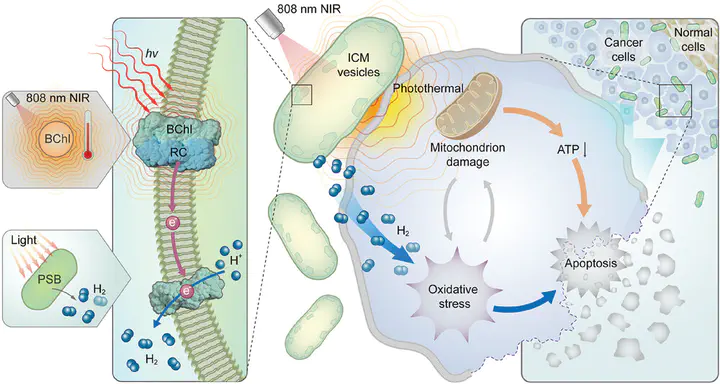
Abstract
Hydrogen gas therapy holds promise as an anti-cancer strategy, but systemic gas administration and chemical generation approaches often have low efficiency, poor targeting, and suboptimal utilization. This study employs living photosynthetic Rhodobacter sphaeroides for in situ hydrogen production combined with near-infrared mediated photothermal therapy. The bacteria absorb near-infrared light, convert it to heat, and generate hydrogen, enabling targeted tumor-cell death while reducing damage to adjacent normal tissues.
Type
Publication
Advanced Science